

By now most B2B marketing operations use a fair amount of tooling. There is a CRM. Marketing automation runs. Campaigns go out through LinkedIn and Google. Website behaviour is measured. Sales works with pipelines, touchpoints and follow-up.
And yet it often does not feel like a scalable growth system. The reason is simple: tools do not make a system.
A CRM records. Marketing automation sends. Advertising optimises. Analytics reports. Sales follows up. But when those parts are not properly connected, what you get is mainly activity — not an intelligent process.
That is where intelligent automation in B2B marketing earns its value. Not as another tool on top of the existing stack. Not as a way to automate as much follow-up as possible. But as a way to arrange data, signals, actions and feedback so that marketing and sales work together on growth more intelligently.
This article looks at the practical set-up. Which building blocks do you need? Which steps do you take? And how do you stop automation simply producing more noise?
Key takeaways
Isolated tools do not make a scalable growth system.
Intelligent automation in B2B marketing is about connecting audience data, signals, interpretation, actions and feedback.
A sharp ICP is the foundation, because otherwise automation mostly scales up noise.
Not every signal is worth the same. Signals have to be weighed on context, account fit, repetition and timing.
Action logic determines which follow-up suits which type of signal.
Marketing, business development and sales all have to sit inside the same feedback loop.
Measure not only workflows, leads or conversions, but account quality, conversations, speed of follow-up and pipeline impact.
Why isolated tools do not make a growth system
Many IT, tech and SaaS organisations already have their marketing technology reasonably well set up. Yet the collaboration between marketing and sales often stays fragile.
Marketing sees clicks, campaigns and conversions. Sales sees conversations, objections and opportunities. Business development sees which approach works and which does not. But that information does not always come together in one coherent process. Which produces familiar problems.
Campaigns deliver leads, but sales lacks context. Website visits are measured, but not linked to account fit. CRM data exists, but is incomplete or out of date. Marketing automation runs workflows without always knowing whether the follow-up is commercially relevant. Sales gives feedback, but that feedback is not brought back to marketing structurally.
The result is teams working harder than they need to. Not because there is too little technology, but because the technology does not function as one system.
Intelligent automation helps connect those separate parts. The aim is not to automate everything. The aim is to get the right information to the right person at the right moment.
The five building blocks of intelligent automation in B2B marketing
To set intelligent automation up properly you need more than a workflow or an AI tool. You need a process in which data, signals, actions and feedback connect to one another.
Five building blocks help with that.

1. Start with your ICP, not with automation. Begin with the question: which accounts are genuinely relevant? Without a sharp ICP you mostly automate noise. Audience data helps separate companies that look interesting from companies that actually fit.
A common mistake is to start with the technology.
“We want to use AI.” “We want to automate more.” “We want smarter follow-up.”
That sounds logical, but it is not the right starting point.
The first question has to be: which accounts do we want to be visible, relevant and active for at all?
If your audience is too broad, automation mainly scales up the wrong signals. Sales gets more notifications, marketing more audiences and the CRM more noise. But the quality does not improve.
Which is why intelligent automation in B2B marketing starts with a sharp ICP. Which companies genuinely fit your proposition? Which sectors are relevant? Which size, maturity, challenges or triggers make an account interesting? Which roles sit in the DMU? And which accounts deserve extra attention because they are strategically important?
Only once that is clear can automation be used intelligently. Not to reach everyone, but to recognise, follow and activate the right accounts better.
2. Decide which signals genuinely mean something. Then look at behaviour. Which interactions point to interest, need or buying intent? Returning website visits, interaction with content, engagement with campaigns, or several people from one organisation moving around the same theme.

Not every signal is worth the same.
One blog visit says little. One ad click says little. A single download can be interesting, but it does not have to mean buying intent.
It only becomes valuable once signals gain context.
When the same account comes back several times, for instance. When several people from the same organisation view content. When someone reads a general blog and later visits a service page. Or when an account that fits your ICP engages around a specific theme.
Signal-based marketing is exactly that way of looking: steering on patterns rather than isolated actions.
For intelligent automation this means deciding in advance which signals count and how heavily they weigh.
A light signal can be reason for nurturing. A stronger one can justify remarketing or a personal connection. A combination of several can be enough to involve business development or sales.
It matters that marketing and sales set those definitions together. If marketing considers a signal warm but sales can do nothing with it, the system does not work. And if sales only gets involved once the opportunity is late in the journey, you miss the momentum.
Good signal definition therefore sits between data and practical experience.

3. Build an interpretation layer. A signal only has value once you understand what it means. Not every website visit matters. Not every download needs follow-up. The interpretation layer helps weigh signals on context, account fit, repetition and timing.
Not every signal is worth the same.
One blog visit says little. One ad click says little. A single download can be interesting, but it does not have to mean buying intent.
It only becomes valuable once signals gain context.
When the same account comes back several times, for instance. When several people from the same organisation view content. When someone reads a general blog and later visits a service page. Or when an account that fits your ICP engages around a specific theme.
Signal-based marketing is exactly that way of looking: steering on patterns rather than isolated actions.
For intelligent automation this means deciding in advance which signals count and how heavily they weigh.
A light signal can be reason for nurturing. A stronger one can justify remarketing or a personal connection. A combination of several can be enough to involve business development or sales.
It matters that marketing and sales set those definitions together. If marketing considers a signal warm but sales can do nothing with it, the system does not work. And if sales only gets involved once the opportunity is late in the journey, you miss the momentum.
Good signal definition therefore sits between data and practical experience.
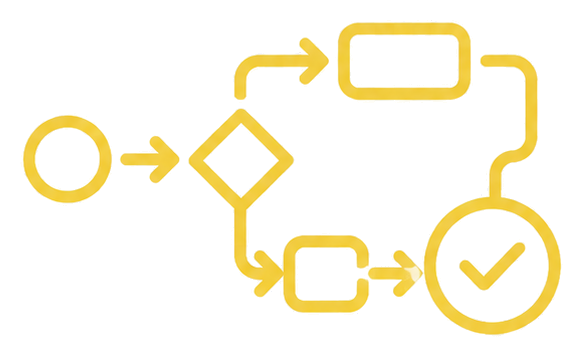
4. Translate signals into actions. If a signal is relevant, it has to be clear what happens next. Does the account stay in nurturing? Does marketing increase content pressure? Does business development get a notification? Or is it time for sales follow-up?
A signal only has value once something happens with it.
That is where many organisations go wrong. Things get measured but not activated. Or follow-up comes too fast, so sales still arrives cold.
Which is why you need action logic.
Action logic means deciding in advance which follow-up suits which type of signal. Not every signal calls for a sales call. Sometimes marketing is up. Sometimes business development. Sometimes the right move is to do nothing beyond continuing to build recognition.
A practical model might look like this:
Light signal: someone from a relevant account reads a blog or views a general page. Action: nurturing or remarketing.
Medium signal: the same account returns to a specific service page or views several pieces of content on one theme. Action: more targeted content pressure or a LinkedIn connection.
Strong signal: several people within one account show interest in the same subject or view high-intent pages. Action: business development gets context for a personal approach.
Commercial signal: a fitting account shows repeated behaviour around a concrete solution and there is clear ICP fit. Action: sales can follow up with a relevant reason to talk.
This stops automation becoming too generic. You are not building a machine that treats everyone the same. You are building a system that draws better distinctions.

5. Put marketing and sales in the same feedback loop. The last building block is feedback. Which signals lead to good conversations? Which actions work? Which campaigns produce pipeline? Without feedback, automation stays an execution process. With it, the system gets smarter.
Intelligent automation only works when the system learns. And that needs feedback.
Marketing can make signals visible, but sales has to report back on whether those signals are commercially relevant. Business development can test which reason to reach out works. Sales can say which accounts were interesting, which timing felt right, and which signals turned out to be worth little.
That feedback has to go back to marketing. If a particular signal regularly leads to good conversations, give it more attention. If a signal rarely delivers, weigh it differently. If a campaign produces plenty of leads but little pipeline, do not only change the ad — change your definition of success.
The feedback loop is what makes automation intelligent. Without it, automation is mostly execution. With it, it becomes a system that keeps prioritising better.
About the author

Robin van Zeijl
Robin Steehouwer-van Zeijl is an Online Marketing Strategist at Leadgate, advising IT, Tech and SaaS organizations on positioning, content strategy and digital growth. She translates complex propositions into clear online strategies that contribute to visibility, authority and long-term impact.
Want to discuss your online strategy or content approach? Schedule a 30-minute session with Robin or connect with her on LinkedIn
FAQ
You start with a sharp ICP, decide which signals are relevant, build an interpretation layer, tie signals to actions, and create a feedback loop between marketing and sales.
A sharp ICP stops automation scaling up the wrong signals. If your audience is too broad, marketing and sales mainly get more noise instead of better opportunities.
Relevant signals are behaviours that point to interest, need or buying intent: returning website visits, several people within one account viewing content, engagement with campaigns, or visits to high-intent pages.
Action logic determines which next step suits which signal. A light signal can lead to nurturing, while a strong signal can be reason for business development or sales follow-up.
Sales feedback shows whether signals are commercially valuable. Without it, marketing keeps optimising on assumptions. With it, the system gets steadily smarter.
Important KPIs are account engagement within your ICP, sales-accepted signals, speed of follow-up, conversations generated from signals, pipeline touched by marketing, and the quality of accounts followed up.
The biggest mistake is starting with tools instead of processes. Intelligent automation only works once it is clear which problem you are solving and which action a signal should trigger.